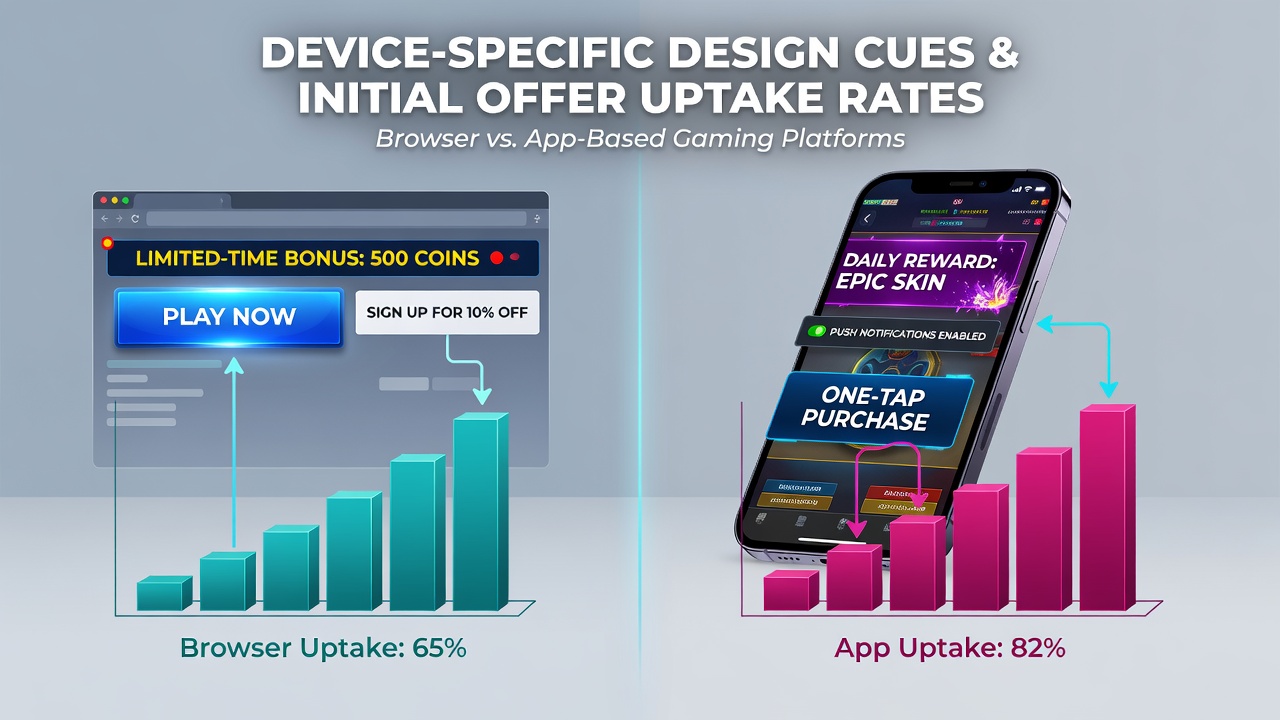
Device-Specific Design Cues That Shape Initial Offer Uptake Rates Across Browser and App-Based Gaming Platforms
Platform differences in how users encounter initial offers emerge through distinct design cues that operate differently in browser environments versus dedicated apps, and data collected across multiple markets show measurable variations in acceptance timing and volume. Browser sessions often rely on visible banners and modal windows that appear during navigation, while apps leverage persistent notification trays and in-app overlays that trigger based on session duration or prior interaction logs. Observers note that these mechanical distinctions produce different response curves when users first engage with promotional prompts.
Browser Interface Patterns and Prompt Timing
Desktop and mobile browser platforms typically present entry incentives through elements positioned above the fold or triggered after a set number of page views, and analytics from platform operators indicate that click-through occurs most frequently within the first 45 seconds of landing. Color contrast ratios, button size relative to surrounding text, and the presence of countdown timers all correlate with higher immediate interaction rates according to aggregated session data. Those who track user flows report that browser users respond more readily when teh offer appears in a fixed header that remains visible during scrolling, whereas dynamic pop-ups that interrupt content generate mixed completion rates depending on device screen dimensions.
Studies compiled by the American Gaming Association reveal that browser-based uptake accelerates when offers include visible progress indicators that show steps required to claim rewards, and the same reports note that session length before the first prompt influences whether users proceed or abandon the flow. Regional operators in North American markets have adjusted banner frequency in October 2026 following internal benchmarks that compared conversion across different viewport sizes.
App Notification Systems and Persistent Cues
Mobile applications shift the emphasis toward background alerts and home-screen widgets that surface offers without requiring active navigation, and platform telemetry shows these cues generate initial responses at different intervals than browser equivalents. Push notifications delivered within the first hour after installation produce higher open rates when they reference account creation milestones, while in-app carousels that rotate through featured promotions maintain visibility across multiple sessions. Researchers tracking retention patterns observe that app users who encounter offers tied to device-specific gestures, such as swipe-to-claim mechanics, complete the initial step more consistently than those who receive static text prompts.
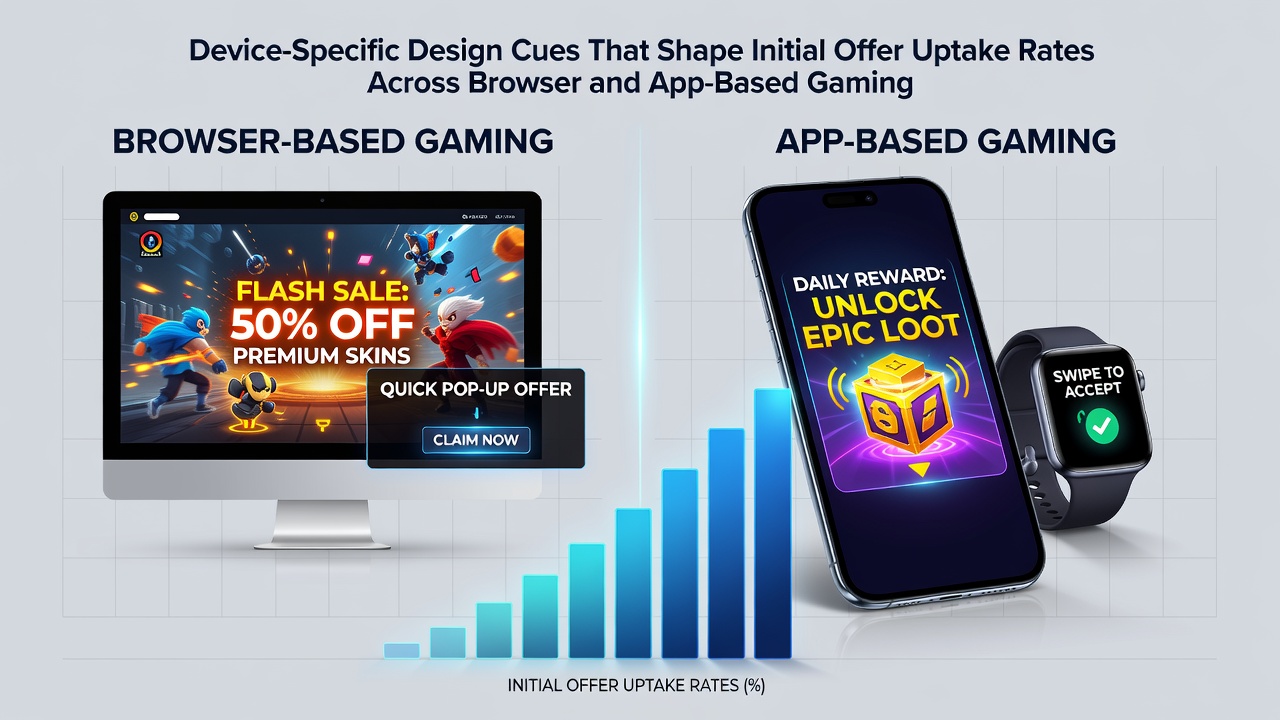
Hardware integration further differentiates app environments, where haptic feedback paired with visual highlights increases the likelihood that users acknowledge the prompt before dismissing it. Data shared by operators in Australian jurisdictions point to elevated uptake when offers appear immediately after biometric login screens, and the same datasets indicate that repeated exposure through widget updates sustains interest across longer timeframes than single-instance browser banners.
Cross-Platform Measurement and Regional Benchmarks
Comparative figures collected through industry monitoring services demonstrate that app platforms record earlier offer engagement on average, yet browser sessions show higher completion percentages once users begin the redemption sequence. These patterns hold across multiple device types and appear influenced by factors such as operating system version and network stability. The Interactive Games and Entertainment Association has published summaries that break down uptake by device category, and those summaries highlight how subtle variations in iconography and micro-animation timing affect whether users advance past the first confirmation screen.
Operators continue to refine cue placement based on these benchmarks, with adjustments implemented in October 2026 reflecting updated telemetry from both browser and app channels. Payment method integration within the offer flow also interacts with design elements, as users who see saved card details alongside the prompt exhibit different progression rates depending on whether they arrived through a browser link or an installed application.
Conclusion
Device-specific design choices continue to determine how quickly and how often users engage with initial offers, and the distinctions between browser and app environments produce measurable differences in timing and volume. Ongoing data collection from regulatory and industry sources supports further calibration of visual and interactive elements to align with observed user behavior across platforms.