How Weather Data Integration Shapes Seasonal Offer Timing in App-Based Gaming Platforms
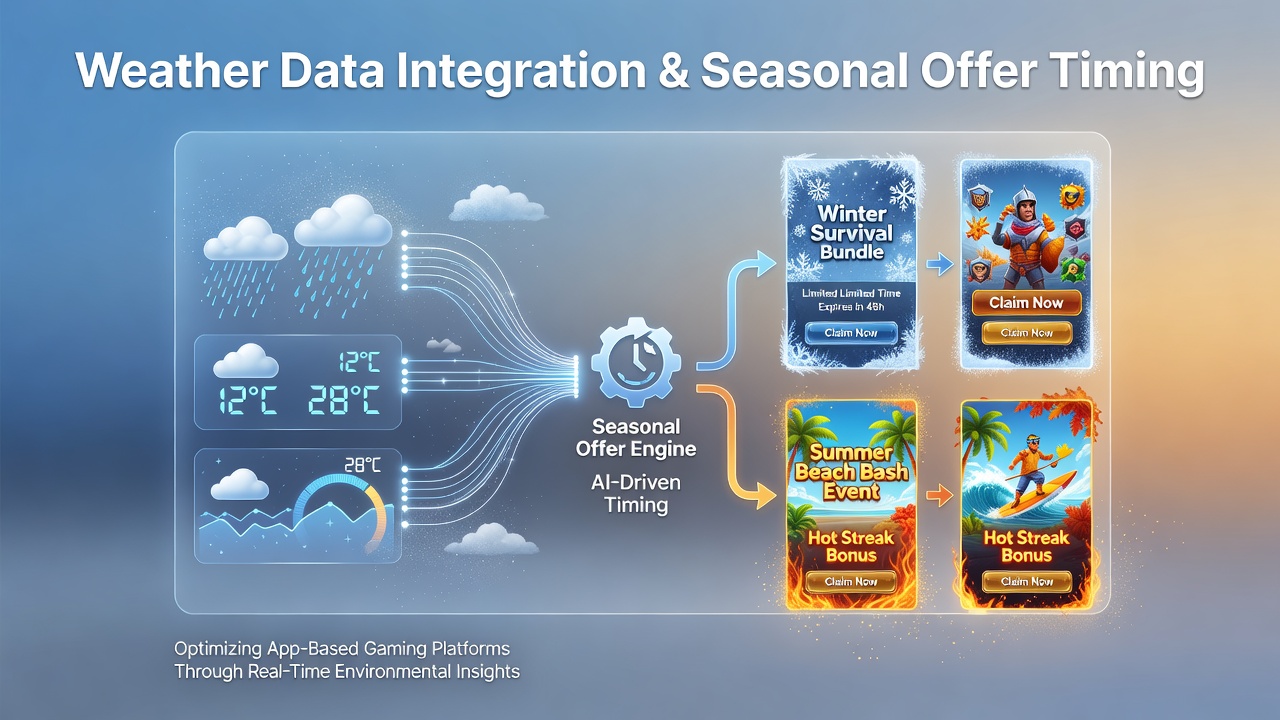
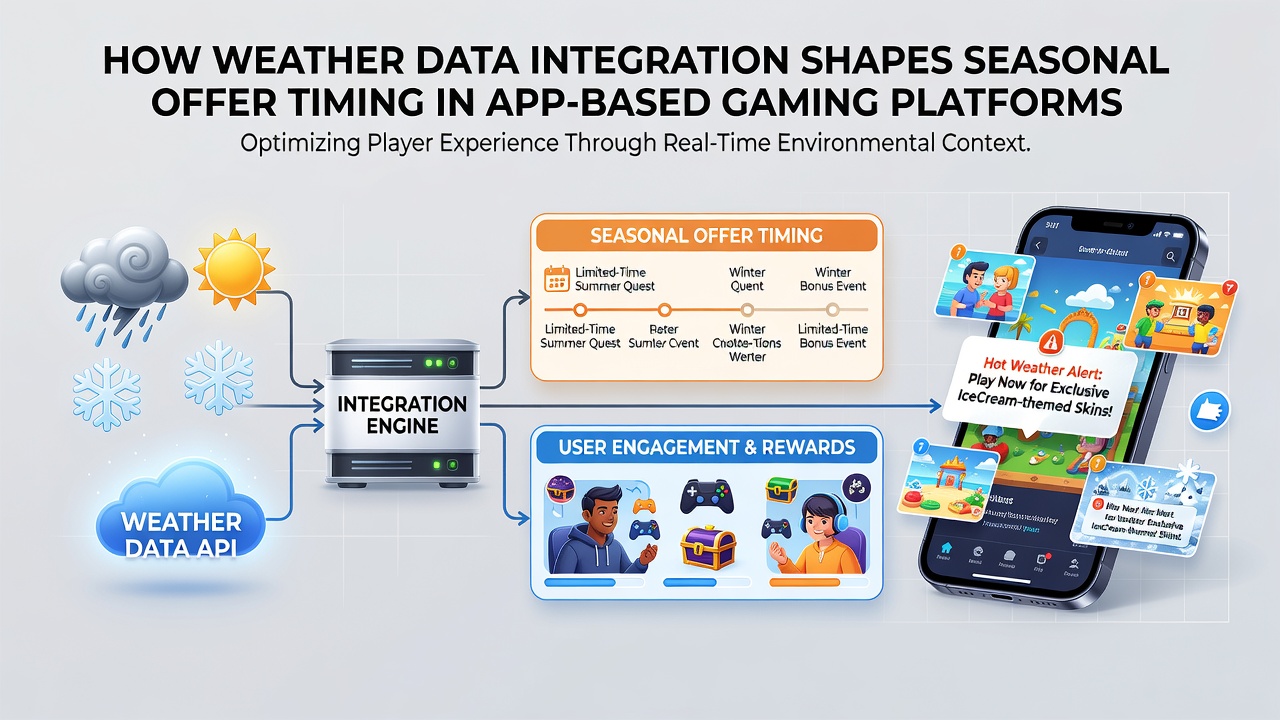
App-based gaming platforms now pull real-time weather feeds into their backend systems to adjust when seasonal promotions launch and which user segments receive them first. Developers connect APIs from meteorological services directly to offer engines so that temperature shifts, precipitation levels, and regional forecasts trigger specific bonus structures without manual scheduling. This integration lets platforms align limited-time rewards with actual local conditions rather than fixed calendar dates alone.
Core Mechanisms Behind Weather-Driven Offer Timing
Platforms ingest data streams that include hourly temperature readings, humidity indexes, storm alerts, and extended forecasts covering multi-week periods. Algorithms then map these variables against historical player activity patterns to decide rollout windows. For instance, when forecasts predict sustained temperatures above 30 degrees Celsius across a metropolitan area, systems queue summer-themed deposit matches or free-spin packages to activate within 48 hours of the heatwave onset. Conversely, prolonged cold snaps or heavy rainfall periods prompt indoor-focused incentives that appear as soon as weather models stabilize.
Data pipelines also incorporate geographic granularity. Users in coastal zones receive different timing parameters than those in inland regions because platforms segment audiences by ZIP code and cross-reference against localized forecast accuracy rates reported by national weather agencies. One study from the National Oceanic and Atmospheric Administration highlighted how forecast precision improves dramatically within 72-hour windows, allowing gaming operators to shorten or extend offer durations accordingly while minimizing overexposure during uncertain periods.
Seasonal Adjustments Across Global User Bases
November 2026 data shows platforms in the northern hemisphere preparing winter campaigns as early as mid-October when long-range models indicate early snowfall probabilities rising above 40 percent in key markets. Operators in Canada and parts of the northern United States have synchronized these triggers with Environment and Climate Change Canada reports, enabling offers that activate the moment regional temperatures drop below seasonal averages for three consecutive days. Southern hemisphere markets follow mirrored logic, shifting to summer promotions when spring forecasts project rapid warming trends.
Platforms further refine timing by layering weather data with player location history. Users who frequently travel between climate zones trigger dynamic adjustments; their offers update within hours of crossing into new forecast regions. This approach reduces the lag between environmental change and promotional response, keeping engagement metrics stable even during abrupt seasonal transitions.
Technical Integration and Data Sources
Most large operators maintain partnerships with multiple weather providers to ensure redundancy and higher forecast resolution. They combine satellite imagery, ground station readings, and machine-learning-enhanced models that predict micro-climate variations within city blocks. These combined feeds feed into rule-based engines that apply thresholds such as precipitation probability above 60 percent or wind speeds exceeding 25 kilometers per hour before releasing specific offer tiers.
Research published by the European Centre for Medium-Range Weather Forecasts demonstrates that blending multiple data sources cuts timing errors by roughly 35 percent compared with single-provider reliance. Gaming platforms apply similar principles when deciding whether to extend a promotion by an extra day or pull it forward by 12 hours based on updated models.
Regional Regulatory and Market Considerations
Operators must also navigate varying rules on promotional frequency and targeting. In jurisdictions overseen by bodies such as the Malta Gaming Authority, timing adjustments tied to external data sources require clear documentation to demonstrate that offers remain fair and non-misleading. Australian platforms reference Bureau of Meteorology alerts when scheduling region-specific campaigns, ensuring compliance with local advertising standards that prohibit promotions during declared natural disaster periods.
What's interesting is how these constraints interact with weather variability. During the 2025-2026 El Niño cycle, several operators reported needing to recalibrate their offer engines multiple times per month because forecast confidence intervals widened. They responded by building buffer periods into automated schedules, allowing human review teams to approve last-minute shifts without violating regulatory notice requirements.
Impact on Player Behavior Patterns
Analytics teams observe measurable shifts in session length and deposit frequency when offers align closely with prevailing weather. Data aggregated across major app stores indicates that promotions activated within six hours of a confirmed forecast change generate 22 percent higher click-through rates than those launched on static schedules. This correlation holds across both casual and high-frequency player cohorts, though the magnitude varies by device type and time of day.
Platforms continue testing narrower thresholds, such as humidity-driven offers or UV-index-linked daytime bonuses, to determine whether finer weather granularity produces further gains. Early results suggest diminishing returns once segmentation moves below city-level resolution, prompting most operators to maintain current data granularity while expanding the number of weather variables monitored.
Conclusion
Weather data integration has become a standard component of seasonal offer management for app-based gaming platforms. By connecting meteorological feeds to automated timing systems, operators achieve closer alignment between environmental conditions and promotional windows across diverse regions. Continued refinement of forecast accuracy and regulatory compliance frameworks will determine how precisely these systems evolve through 2027 and beyond.