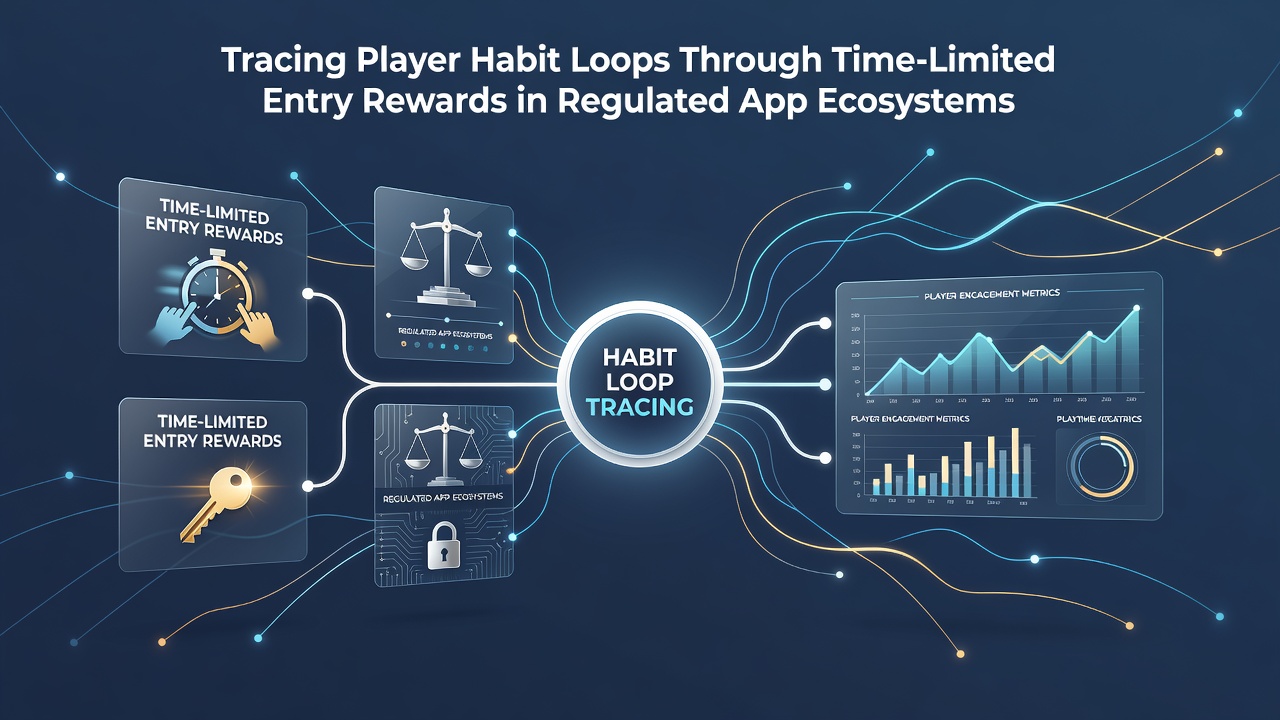
Tracing Player Habit Loops Through Time-Limited Entry Rewards in Regulated App Ecosystems
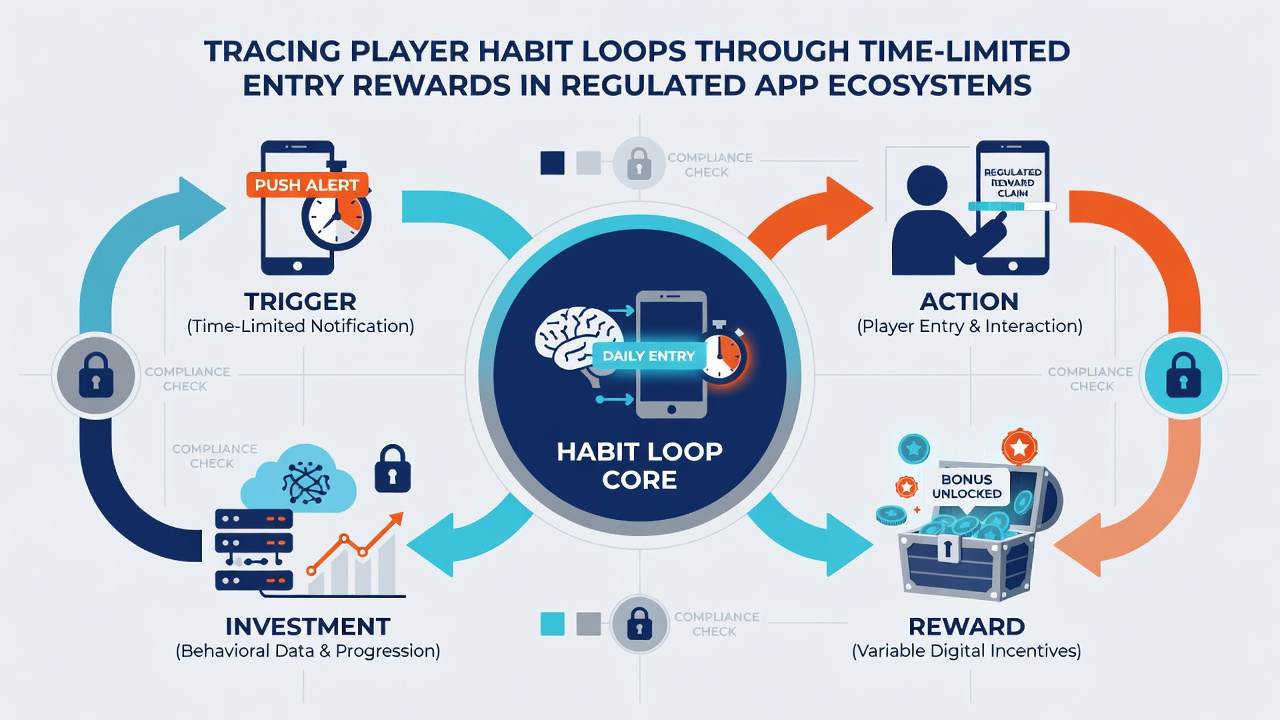
Regulated app ecosystems rely on structured promotional mechanics that encourage repeated engagement through carefully timed incentives, and time-limited entry rewards represent one of the most direct tools operators deploy to establish consistent player routines. These rewards typically activate upon initial login or deposit within a narrow window, creating a sequence where the prompt arrives via notification, the action follows through app access, and the benefit arrives as bonus credits or spins that carry their own expiration.
Studies in behavioral tracking across mobile platforms indicate that such sequences align with established habit formation models because the deadline element compresses the interval between cue and reward, which data from multiple jurisdictions shows can accelerate the development of login patterns within the first seven to fourteen days of account creation.
Mechanics of Time-Limited Rewards in Daily App Interactions
Operators structure entry rewards with countdown timers that appear both on the home screen and through push notifications, and these timers trigger when a player opens the app during specific windows such as morning commute hours or evening leisure periods. Research from Canadian regulatory reports highlights that provinces with strict advertising rules still permit these mechanics provided the terms remain transparent and the reward does not exceed defined value thresholds, allowing platforms to maintain compliance while observing measurable increases in session frequency during the active promotion period.
The reward itself often requires a minimal qualifying action such as a small deposit or simple game round, after which the time constraint on redemption reinforces the loop by prompting return visits before expiration. Observers note that platforms operating under frameworks like those enforced by the Alcohol and Gaming Commission of Ontario document higher retention rates when the reward window spans forty-eight to seventy-two hours, giving players enough flexibility to fit the action into existing schedules without overwhelming daily routines.
Regulatory Boundaries Shaping Reward Design Across Regions
European markets governed by the Malta Gaming Authority impose disclosure requirements that force operators to present expiration details prominently, and this transparency influences how habit loops form because players receive clear information about deadlines rather than discovering them mid-session. Data collected in September 2026 from licensed operators in that jurisdiction revealed that compliance-focused designs still produced consistent daily return rates, suggesting the regulatory emphasis on clarity does not eliminate the behavioral reinforcement but channels it into more predictable engagement windows.
Similar patterns appear in Australian state-level oversight where time-limited offers must align with harm minimization guidelines, yet operators continue to report elevated login activity when rewards tie directly to existing app features like loyalty tiers or progressive jackpots. The combination of regulation and reward timing creates environments where players develop routines that persist even after the initial promotion ends, particularly when the app interface reinforces the habit through recurring visual cues.
Behavioral Data Patterns Observed in 2026 Reporting Periods
Industry analyses released in September 2026 from multiple regulated markets demonstrated that players exposed to successive time-limited entry rewards exhibited shorter intervals between sessions compared with control groups receiving non-expiring incentives, and these shorter intervals correlated with increased cumulative play time over thirty-day tracking periods. The data further indicated that the effect strengthened when rewards stacked with existing loyalty mechanics, creating layered cues that prompted returns even on days without new promotions.
Researchers tracking anonymized session logs across compliant platforms found that the habit loop often stabilized around specific times of day, with morning and late-evening peaks emerging most frequently in markets where push notification timing complied with local quiet-hour restrictions. This temporal clustering suggests that once the initial reward cycle establishes the routine, external regulatory limits on notification volume do not fully disrupt the pattern because players begin initiating sessions independently.
Longer-Term Retention Effects and Cross-Platform Variations
Platforms that cycle different reward types while maintaining the time-limited structure show sustained session consistency across device types, according to aggregated figures from North American operators, and the consistency holds when players switch between mobile and tablet interfaces because the core loop remains tied to account-level timing rather than device-specific features. Yet variations emerge when regulatory updates alter maximum reward values, with some jurisdictions noting temporary dips in return frequency until operators adjust the incentive structure to fit new caps.
Academic examinations of similar reward systems in other app categories confirm that the addition of a countdown element reliably shortens the time required for habit consolidation, and gaming platforms operating under comparable constraints demonstrate parallel outcomes when the reward directly supports core gameplay loops rather than functioning as a standalone bonus.
Conclusion
Time-limited entry rewards in regulated app ecosystems function as structured behavioral tools that align player actions with platform goals while remaining subject to regional compliance standards. Data from 2026 across multiple oversight bodies illustrates measurable impacts on session frequency and retention windows, with the habit loop formation process shaped by both the reward mechanics and the surrounding regulatory environment. Continued monitoring of these patterns provides operators and regulators with clearer visibility into how promotional timing interacts with daily user behavior across compliant digital platforms.